
How do you use JD-FM-158 in Connecticut divorce cases?
Learn what JD-FM-158 means, when the restrictions start, and which deadlines and conduct rules it triggers after service.
Quick answer: What to know first
JDFM158 is the Connecticut notice of automatic court orders that comes with the opening divorce papers. If you searched by code instead of the full title, the key point is that you usually do not fill out the notice itself. You read it immediately and comply with the restrictions and deadlines it triggers.
- What JD-FM-158 means in a divorce case
- Fast checklist once you receive it
- The restrictions people usually underestimate
Get Help
Get help with your divorce
Get guided answers, organize your paperwork, and move through Connecticut divorce with a clearer plan.
In this guide
- What JD-FM-158 means in a divorce case
- Fast checklist once you receive it
- The restrictions people usually underestimate
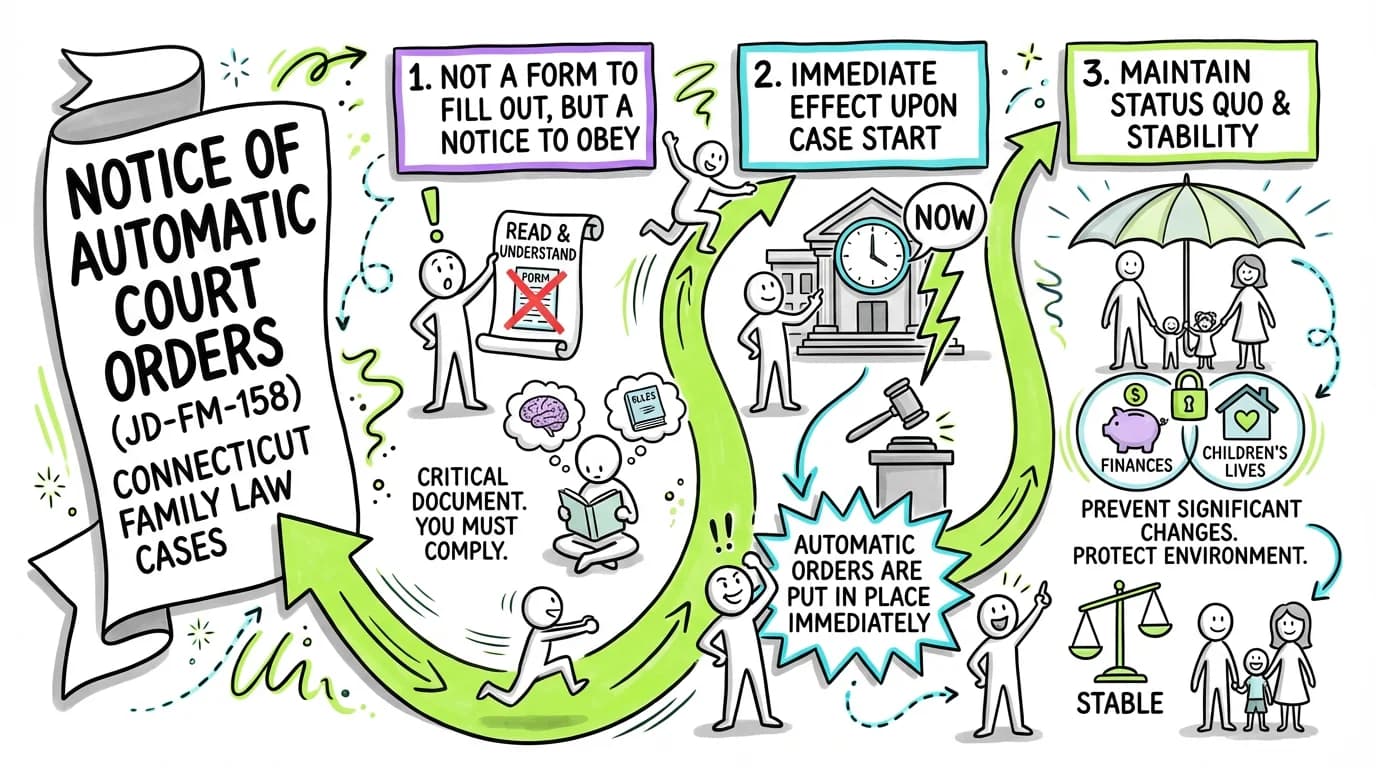
JD-FM-158 is the Connecticut notice of automatic court orders that comes with the opening divorce papers. If you searched by code instead of the full title, the key point is that you usually do not fill out the notice itself. You read it immediately and comply with the restrictions and deadlines it triggers.
What JD-FM-158 means in a divorce case
JD-FM-158 is the shorthand way people refer to Connecticut's automatic-orders notice. The official notice comes from the Judicial Branch, and it tells the parties which conduct rules apply while the family case is pending. In practice, the document matters because it changes what you can do with money, insurance, and certain child-related decisions before the judge enters any custom temporary order. The code therefore represents more than a form number. It points to the standing rules that shape the case from the beginning and create exposure if either side acts unilaterally.
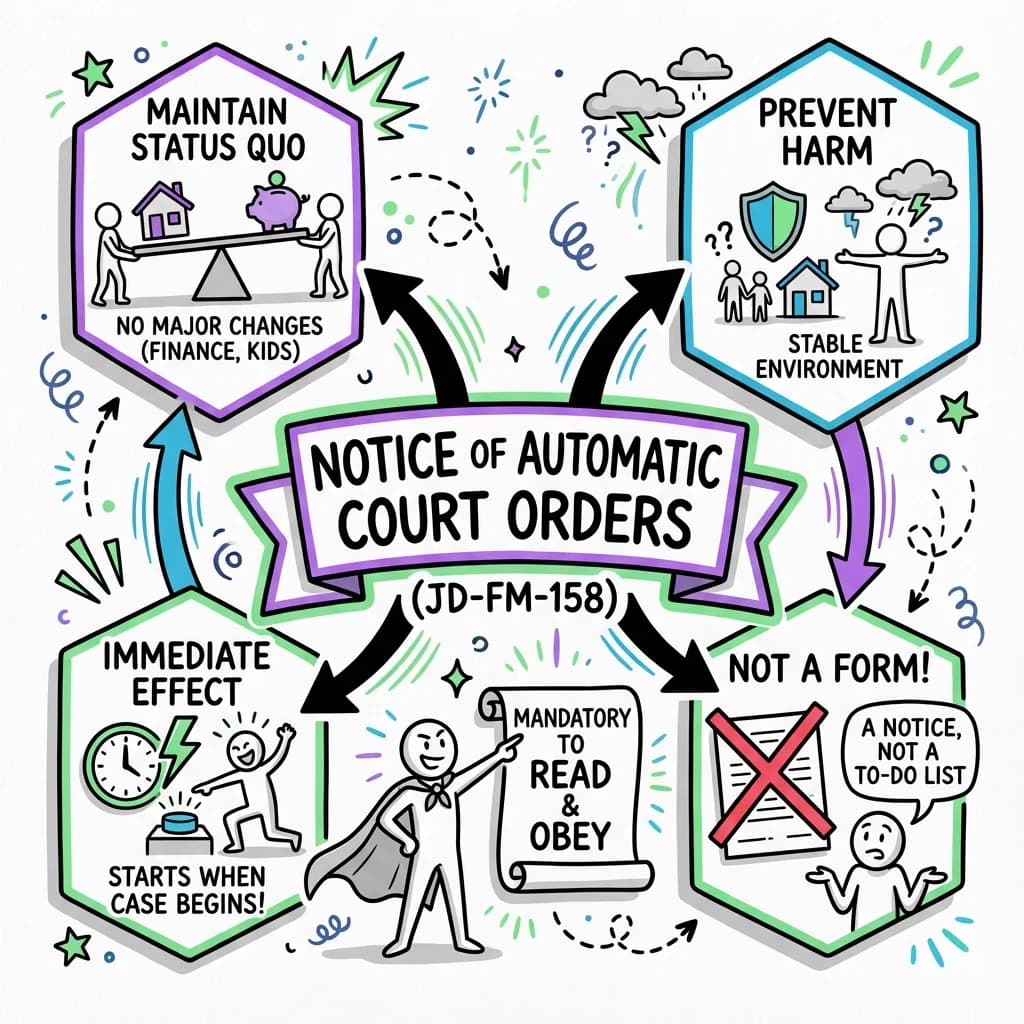
Fast checklist once you receive it
The first thing to do is identify the return date on the summons because several next steps referenced by JD-FM-158 depend on that starting point. Then read the notice for anything that affects your current finances, insurance coverage, or living arrangements with the children. If you are the defendant, check whether you also need to file an appearance promptly after service. If the case involves children, note the parenting education requirement and any time-sensitive task that follows from it. A quick but careful first review is better than skimming the notice and discovering a restriction only after you already changed something important.
The restrictions people usually underestimate
Most trouble comes from the parts of JD-FM-158 that feel ordinary until the case is underway. People underestimate the risk of changing beneficiaries, moving funds out of joint accounts, taking on unusual debt, or altering insurance coverage because those choices can look routine outside litigation. In cases with children, relocation or disruption of regular contact can also collide with the notice. The form is trying to preserve the status quo while the court sorts out the dispute, which is why even moves that feel practical or temporary can become controversial if they are made without consent or court approval.
When JD-FM-158 matters in the case timeline
JD-FM-158 matters immediately because it sits near the front of the divorce timeline rather than near the end. The notice is attached to the opening papers, and the restrictions begin before the case reaches any final hearing or settlement. That timing matters because it overlaps with the period when people are also filing appearances, exchanging financial affidavits, and making first decisions about living arrangements. In other words, JD-FM-158 is not background information for later. It is part of the early framework of the case, and ignoring it can make the first phase of the divorce more complicated than it needed to be.
Quick review before you change anything significant
Before you move money, change insurance, or make a major parenting decision, reread JD-FM-158 and ask whether the step changes the status quo in a way the notice is trying to prevent. If the answer might be yes, slow down and consider whether you need written agreement or a court order. Also keep documents showing current balances, coverage, or parenting arrangements in case the other side later says you violated the notice. A short review at the decision point is often enough to prevent a small unilateral choice from turning into a contempt fight or emergency motion.
Frequently Asked Questions
People who search by code usually want the shortest possible explanation of whether JD-FM-158 is something they complete or something they obey. These answers focus on when the orders start, what kind of conduct is risky, and what to do if the other side breaks the rules. The practical point is that the notice is enforceable even though it does not look like a normal filled-in court form at first glance in the packet or service papers.
Do I personally fill in boxes on JD-FM-158?
Usually no. JD-FM-158 is mainly a notice attached to the opening family papers, so the important task is reading it and following the restrictions rather than completing it like a worksheet. What matters most is understanding which actions are restricted while the case is pending. If the notice points you toward a next step, such as filing an appearance or completing another required form, that follow-up action happens on a different document in the file.
When do the automatic orders tied to JD-FM-158 start to matter?
They matter as soon as the case reaches the filing-or-service point described in the notice and related rules, not only after a later hearing. That timing is what catches people off guard. By the time the defendant is reading the packet, the rules are already part of the case framework. Waiting for a judge to repeat the notice in person is a common mistake that can lead to avoidable violations later in the case and on the docket record.
Can I change insurance or account beneficiaries after I receive JD-FM-158?
Not casually. JD-FM-158 is designed to stop unilateral changes that could disrupt the financial or family status quo while the case is pending. Insurance changes, beneficiary changes, and significant account moves are exactly the types of decisions that create problems when made without consent or court approval. If a change feels urgent, it is usually safer to document the issue and seek agreement or relief rather than acting first and defending it later in court.
What if the other side seems to be ignoring the automatic orders?
Start collecting proof right away instead of relying on memory later. Account statements, cancellation notices, emails, and insurer letters can all matter if the dispute turns into a court issue. Once you know what changed, decide promptly whether the problem should be addressed through direct communication, counsel, or a formal motion. Early documentation is usually the difference between a concrete claim and a vague complaint that is hard to prove in court later if the facts become contested.

Author
Linda Douglas, Esq.
Chief Legal Officer, Untangle
Linda Douglas is a Divorce and Family Attorney with 38 years of experience handling nearly 2,000 cases in Connecticut and New Hampshire. She is licensed to practice law in Connecticut and New Hampshire.
Legal citations
- JD-FM-158 Notice of Automatic Court Orders
- Connecticut Practice Book § 25-5
- JD-FM-003 Summons Family Actions
Related guides
Keep exploring
Get Help
Get help with your divorce
Get guided answers, organize your paperwork, and move through Connecticut divorce with a clearer plan.