
How do you fill out JD-CL-012 in Connecticut divorce cases?
Learn what JD-CL-012 means, what information to copy from your summons, and how to file it without missing the court's notice details.
Quick answer: What to know first
JDCL012 is the Connecticut appearance form used in divorce and other civil cases to tell the court who is appearing and where notices should be sent. If you searched by the form code instead of the full title, the task is still the same: copy the case details correctly, give current contact information, and file it early.
- What JD-CL-012 means in a divorce case
- Fast checklist before you fill it out
- The fields people usually trip over on JD-CL-012
Get Help
Get help with your divorce
Get guided answers, organize your paperwork, and move through Connecticut divorce with a clearer plan.
In this guide
- What JD-CL-012 means in a divorce case
- Fast checklist before you fill it out
- The fields people usually trip over on JD-CL-012
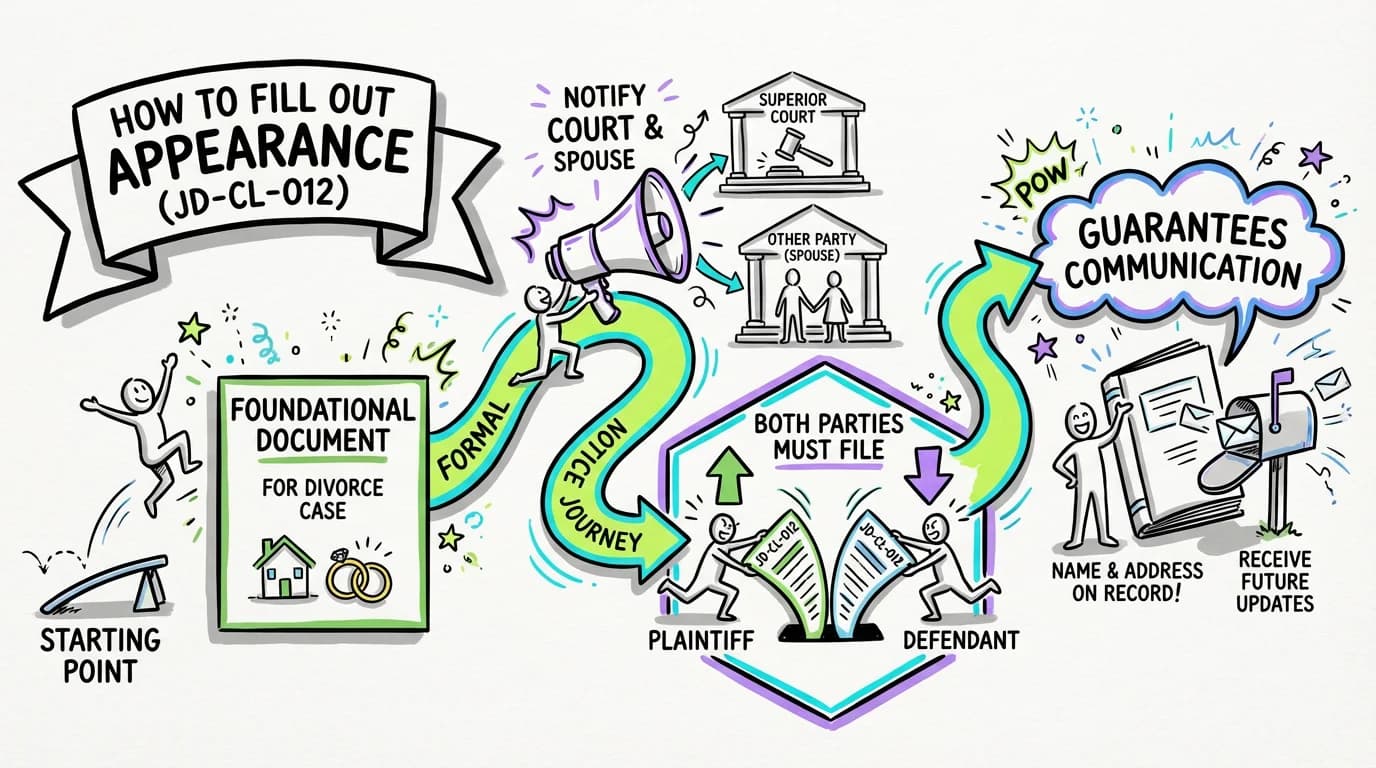
JD-CL-012 is the Connecticut appearance form used in divorce and other civil cases to tell the court who is appearing and where notices should be sent. If you searched by the form code instead of the full title, the task is still the same: copy the case details correctly, give current contact information, and file it early.
What JD-CL-012 means in a divorce case
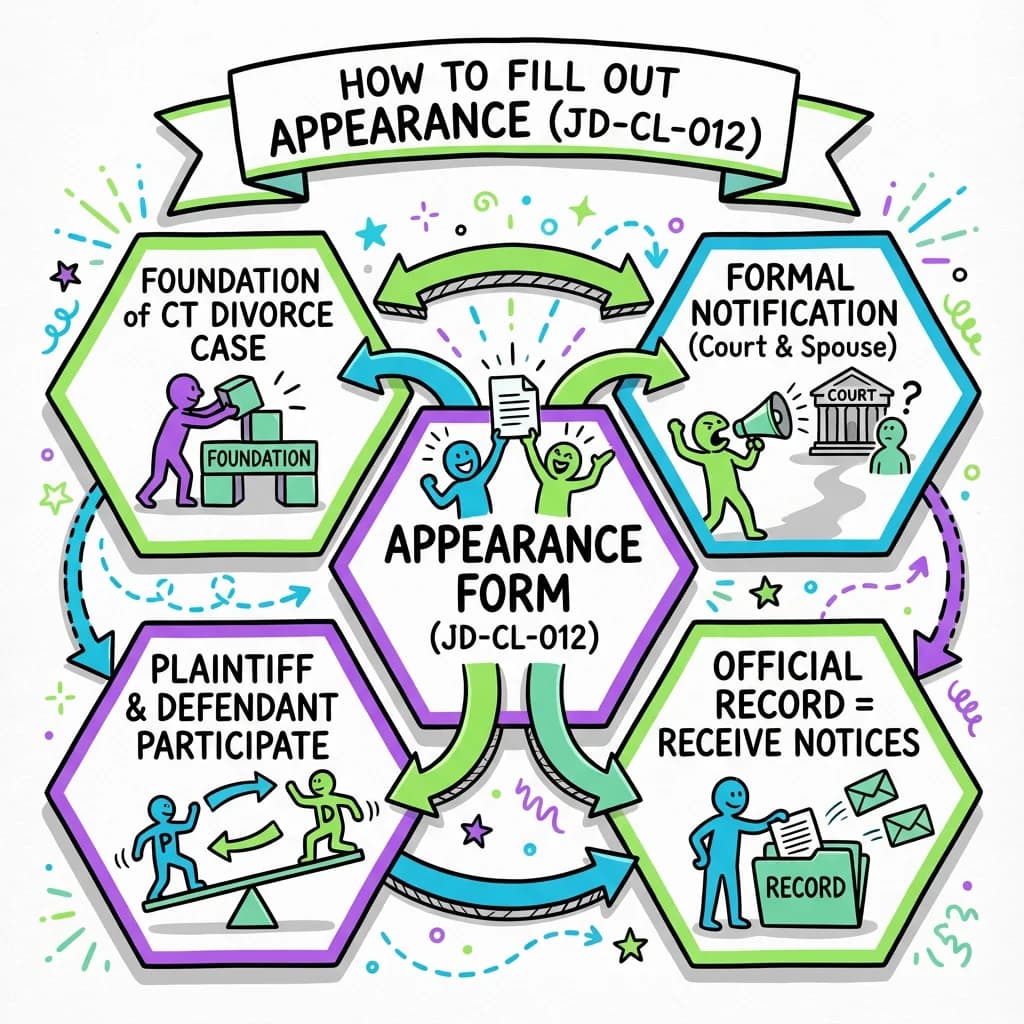
JD-CL-012 is shorthand for the Connecticut Judicial Branch's Appearance form. The form itself is not unique to divorce cases, but it is commonly used in family court because each spouse needs a formal way to appear in the action and receive future notices. The official version is published by the Judicial Branch, and the Branch's self-help materials explain that it can be used for an initial appearance or for a later address change. In practical terms, JD-CL-012 is the form that keeps the court from treating you like a silent party after the case has already started.
Fast checklist before you fill it out
Have the summons in front of you first because JD-CL-012 depends on information that already exists on the case-opening paperwork. You will need the return date, the court location, the case caption, and the docket number if one has been assigned. You also need the exact address, phone number, and email you want the court to use from this point forward. If an attorney is appearing instead of you, gather the attorney's firm information and juris number before you begin. Working from the family summons and your complaint at the same time is the easiest way to avoid mismatched names or dates.
The fields people usually trip over on JD-CL-012
Most filing problems come from the small boxes rather than the larger concepts. The return date belongs in the upper case-information area and should be copied from the summons exactly, not guessed from a calendar. The caption should list the same plaintiff and defendant names used on the complaint, even if the everyday names are shorter. In the appearance section, identify whether the filing is for the plaintiff, the defendant, or another party listed on the form. The Judicial Branch tutorial also explains the change-of-address checkbox, which matters if you are filing an updated appearance later in the case. Before signing, read the contact fields once more because those entries control future notice delivery.
When JD-CL-012 is filed in the divorce timeline
JD-CL-012 usually appears at the beginning of the divorce timeline, either when the plaintiff files the initial packet or when the defendant responds after service. Filing it early is important because the court uses the appearance to connect later notices, motions, and scheduling information to a real address or email account. If you are the defendant, remember that the appearance alone does not answer the complaint, so it may only be one part of your first response package. Later in the case, the same form can be reused to update your address when you move or change counsel. The code stays the same, but the purpose shifts from entering the case to keeping your notice details accurate.
Quick review before you sign or file
Read JD-CL-012 once from top to bottom as if you were the clerk trying to match it to the summons. Confirm that the caption, return date, and docket number align with the rest of the file. Make sure the email and mailing address are places you actively monitor, because court deadlines become much harder to fix after a missed notice. If you are filing on paper, keep a copy stamped by the clerk. If you are filing electronically, save the confirmation that shows the appearance was received. That extra review only takes a minute and is usually enough to catch the kind of simple contact errors that create avoidable delay.
Frequently Asked Questions
People who search by form code usually want a quicker explanation than the full-title article gives them. These questions focus on what JD-CL-012 stands for, whether it is only for defendants, and how the form fits into the first stage of a Connecticut divorce. The short answer is that the code is just shorthand, but the filing consequences are real. Once you know the code refers to the appearance form, the rest of the filing logic becomes much easier to follow.
Is JD-CL-012 only for the spouse who was served?
No. Either side can use JD-CL-012 because it is the general appearance form for Connecticut civil and family matters. In divorce practice, the plaintiff may file it with the opening packet, and the defendant often files it soon after service so future notices come directly to the right address. The important point is not who uses it first, but whether the court has a current appearance on file for the party who expects to receive later motions and scheduling notices.
What is the difference between JD-CL-012 and the summons?
The summons opens the case and sets the return date, while JD-CL-012 tells the court who is appearing in that already opened case. You usually copy information from the summons onto the appearance form, but the two documents do different jobs in the filing packet. The summons is case-opening paperwork that supports service, while the appearance is the notice form that tells the court where future communications should go after service is complete and ongoing scheduling notices begin.
Can I file JD-CL-012 after my lawyer withdraws?
Yes. If counsel withdraws, a self-represented party can file a new JD-CL-012 to show the court that notices should now go directly to them. That filing is also the place to confirm your own mailing address, phone number, and email after the representation change. Updating the appearance quickly matters because court notices can otherwise keep going to former counsel while you assume they are already being sent to you and no one corrects the court record.
Will the court reject JD-CL-012 if I leave off my email address?
The safest approach is to complete every contact field requested on the current form unless the form instructions give you a reason not to. Missing contact details can slow notice delivery, and the clerk may ask for corrections if the appearance is incomplete or hard to process. Even if a clerk accepts a sparse filing, leaving out the address or email you actually monitor makes it much easier to miss the next round of case notices.

Author
Linda Douglas, Esq.
Chief Legal Officer, Untangle
Linda Douglas is a Divorce and Family Attorney with 38 years of experience handling nearly 2,000 cases in Connecticut and New Hampshire. She is licensed to practice law in Connecticut and New Hampshire.
Legal citations
- JD-CL-012 Appearance
- Connecticut Judicial Branch self-represented party tutorial: Filing an Appearance
- JD-FM-003 Summons Family Actions
Related guides
Keep exploring
Get Help
Get help with your divorce
Get guided answers, organize your paperwork, and move through Connecticut divorce with a clearer plan.