
How to Fill Out JD-FM-249 Certification of Waiver of Service of Process
Complete step-by-step instructions for filling out JD-FM-249, Connecticut's waiver of service form for divorce, legal separation, and annulment cases.
Quick answer: What to know first
To fill out JDFM249, the defendant reviews the opening divorce papers, signs the waiver in front of a notary or court official, and files it with an appearance. The form lets a Connecticut divorce start without marshal service when both sides are cooperating and the defendant voluntarily accepts the papers.
- Overview
- What You Need Before You Start
- Step-by-Step Instructions
Get Help
Get help with your divorce
Get guided answers, organize your paperwork, and move through Connecticut divorce with a clearer plan.
In this guide
- Overview
- What You Need Before You Start
- Step-by-Step Instructions
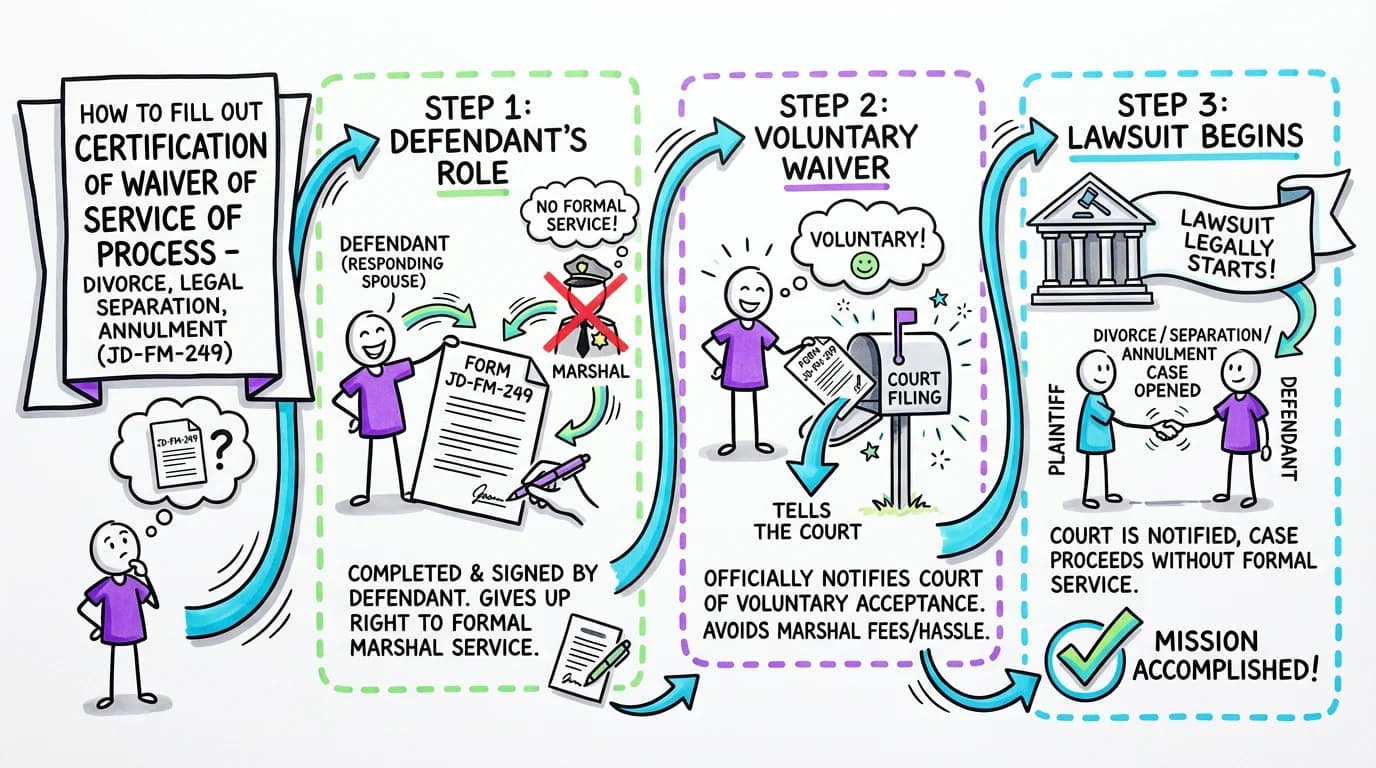
To fill out JD-FM-249, the defendant reviews the opening divorce papers, signs the waiver in front of a notary or court official, and files it with an appearance. The form lets a Connecticut divorce start without marshal service when both sides are cooperating and the defendant voluntarily accepts the papers.
The form saves time and expense, but it is not a casual shortcut. By signing, the defendant confirms receipt of the case-opening documents and gives up the right to formal service by a marshal. That is why the form should be read carefully before any signature is placed on it.
Overview
JD-FM-249 is the Connecticut certification used when a defendant waives formal service of process in a divorce, legal separation, or annulment case. Connecticut law generally requires service of the complaint and related papers under C.G.S. § 46b-45, but the official JD-FM-249 form provides a way for the defendant to accept the papers voluntarily instead of being served by a marshal.
That makes the form especially common in amicable cases. It does not mean the defendant agrees with every request in the complaint, and it does not finish the divorce. It only addresses the notice step at the beginning of the case. Once the waiver is properly signed and filed, the case can move ahead without paying for or arranging personal service.
What You Need Before You Start
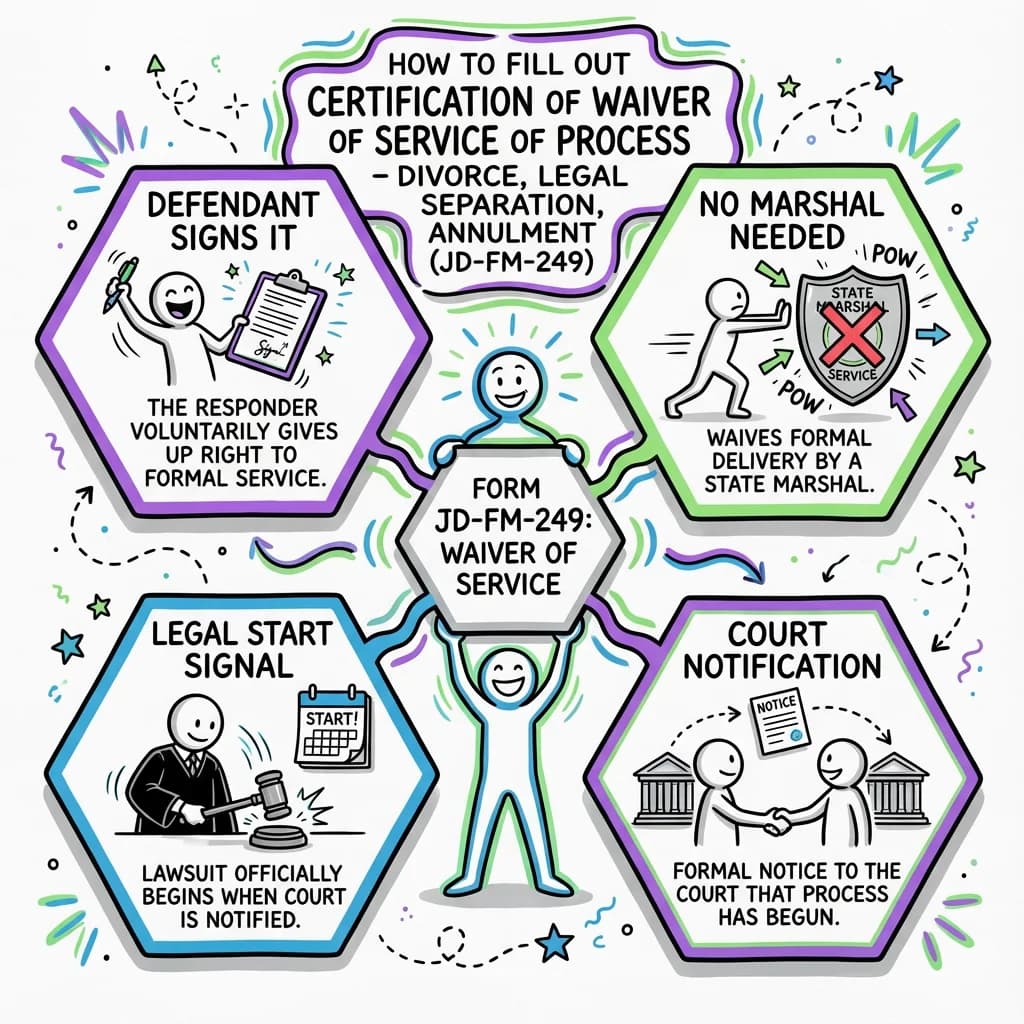
Before signing JD-FM-249, the defendant should have the full set of opening papers in hand. That usually includes the summons, complaint, and automatic orders, plus any child-related papers if children are involved. The defendant should read those documents first, because the waiver confirms receipt of them. If pages are missing, it is smarter to pause and ask for the complete packet than to sign based on assumptions.
The defendant also needs photo identification and access to a notary public or commissioner of the Superior Court. An appearance form should be prepared at the same time, because waiver of service and appearance typically move together in cooperative cases. Linda Douglas often advises treating this as a review step, not just a signature step, so the defendant understands what case was filed and what deadlines follow.
Step-by-Step Instructions
Begin by checking that the case caption and party names on JD-FM-249 match the summons and complaint exactly. If the defendant's name is misspelled or the wrong case is attached, fix that before anyone signs. Then read the waiver language carefully. The critical point is that the defendant is acknowledging receipt of the case-opening packet and waiving formal service, not admitting the factual allegations or agreeing to the relief requested.
Sign only in the presence of the notary or court official who will complete the certification block. Do not pre-sign the form at home. After notarization, file JD-FM-249 together with the appearance form and keep copies with the rest of the opening papers. If the parties are using a waiver to keep the case cooperative, consistent filing and recordkeeping matter just as much as the signature itself because the clerk must be able to see a clean notice trail.
Common Mistakes to Avoid
The biggest mistake is assuming JD-FM-249 is safe to sign without reading the complaint. The form only waives service; it does not protect you from filing deadlines or from orders that may already apply. Another common mistake is signing before a notary witnesses the signature. That usually forces the defendant to start over with a fresh signature and a fresh certification block.
People also create avoidable problems by filing the waiver without an appearance or by relying on a verbal promise that the other side will fix any paperwork later. If the packet is incomplete, pause first. If the case is not actually amicable, marshal service may be the cleaner path. A valid waiver should make the file simpler, not create uncertainty about what was delivered or when the defendant entered the case.
Related Forms
JD-FM-249 usually appears alongside the appearance form and the standard divorce opening packet. The appearance tells the court that the defendant is participating and where notices should be sent, while the waiver explains why no marshal return of service is attached. Together, those forms replace the ordinary proof-of-service package at the start of a cooperative case.
The connection matters because a waiver does not make the rest of the opening papers disappear. The complaint still defines the claims, the automatic orders still apply when the rules say they do, and any child-related forms still need to be handled correctly. Think of JD-FM-249 as the procedural bridge between receiving the papers informally and putting a valid court record in place.
Next Steps
After JD-FM-249 is signed and notarized, file it promptly with the appearance so the clerk can process the case without waiting for marshal papers. Keep a copy of the signed waiver with the exact complaint packet the defendant received. That record is useful if there is ever a later dispute about what documents were provided or when the defendant accepted them.
Once the waiver is filed, the case continues like any other Connecticut family case. That means watching response deadlines, financial-disclosure obligations, and any automatic-order requirements that apply. The waiver solves the service question only. It does not replace negotiation, settlement review, or later court procedures, so the rest of the case still needs the same care as a formally served divorce.
Frequently Asked Questions
Readers usually want to know whether JD-FM-249 is a concession or just a convenience. The short answer is that it is a convenience tool for the service step, but it still carries legal consequences because it changes how the case begins. These answers focus on the practical limits of the waiver and the situations where using it makes sense. They are also the questions that tend to trigger avoidable filing mistakes in real family cases.
Does signing JD-FM-249 mean I agree with the divorce complaint?
No. Signing JD-FM-249 means you accept receipt of the case-opening papers and waive formal service by a marshal. It does not mean you admit the allegations, accept the proposed relief, or give up the right to disagree later. You are only addressing notice. You should still read the complaint carefully, file an appearance, and respond through the normal court process if there is anything you contest in the case. Service and agreement are two different things.
Why use a waiver instead of waiting for marshal service?
The main reason is efficiency. A waiver can save the cost and scheduling delay of formal service when both sides are cooperative and the defendant already has the papers. It can also reduce tension at the start of the case. That said, a waiver is best when everyone is actually organized and acting voluntarily. If trust is low or the packet is incomplete, marshal service may produce a cleaner record. Clarity matters more than speed.
What happens if I refuse to sign the waiver?
If you refuse to sign, the plaintiff usually has to arrange formal service through a state marshal or another legally authorized method. Refusing the waiver does not end the divorce case; it only changes how the plaintiff proves notice. In some cases that is the better choice, especially if you want the certainty of formal service or you believe the papers you received informally were incomplete or misleading. The process simply becomes more formal, not impossible.
Do I still need to file an appearance if I sign JD-FM-249?
Yes. The waiver deals with service, while the appearance tells the court that you are participating and where court notices should be sent. Filing only the waiver leaves the record incomplete and can create unnecessary clerk follow-up. In a cooperative case, the cleanest practice is to complete the waiver, sign it before a notary, and file it together with the appearance so the court sees both notice and participation clearly. That pairing avoids unnecessary clerk questions.
Get Help with Your Connecticut Divorce
JD-FM-249 works well when the parties are cooperative, organized, and clear about what papers are being exchanged. If you are unsure whether a waiver is appropriate, or if the case is friendly on the surface but tense underneath, it helps to get guidance before the first filing goes in. Untangle can help you compare waiver versus marshal service, organize the opening packet, and reduce avoidable errors at the start of the case. That early decision often shapes how smoothly the rest of the file moves.

Author
Linda Douglas, Esq.
Chief Legal Officer, Untangle
Linda Douglas is a Divorce and Family Attorney with 38 years of experience handling nearly 2,000 cases in Connecticut and New Hampshire. She is licensed to practice law in Connecticut and New Hampshire.
Legal citations
- C.G.S. § 46b-45 (Service and filing of complaint)
- JD-FM-249 official form
Get Help
Get help with your divorce
Get guided answers, organize your paperwork, and move through Connecticut divorce with a clearer plan.